Communication Recording Agent and Avaya
This topic provides general architecture details for the Uniphore Avaya Aura integration. For system deployment details specific to your environment please refer to your Solution Design Document from Uniphore.
Integration Overview
This topic details the integration processes needed when recording Avaya phones via the Aura AES™ with the DMCC, using the Multiple Registration (MR) or Single Step Conferencing (SSC) method.
Avaya DMCC provides an “active” recording method where the phone system sends a dedicated media stream directly to the Collector with its associated data, providing a scalable and network independent method of recording.
On the Collector, the Avaya SMS CTI Server connects to the System Management Service (SMS) on the Avaya AES via HTTPS – this is used to automatically detect and add recordable devices, as well as raise alerts for any Communication Manager (CM) stations using Multiple Registration (MR) that may be incorrectly configured.
Note
Legacy platforms might use an Avaya Media Gateway instead of an Avaya Media Server.
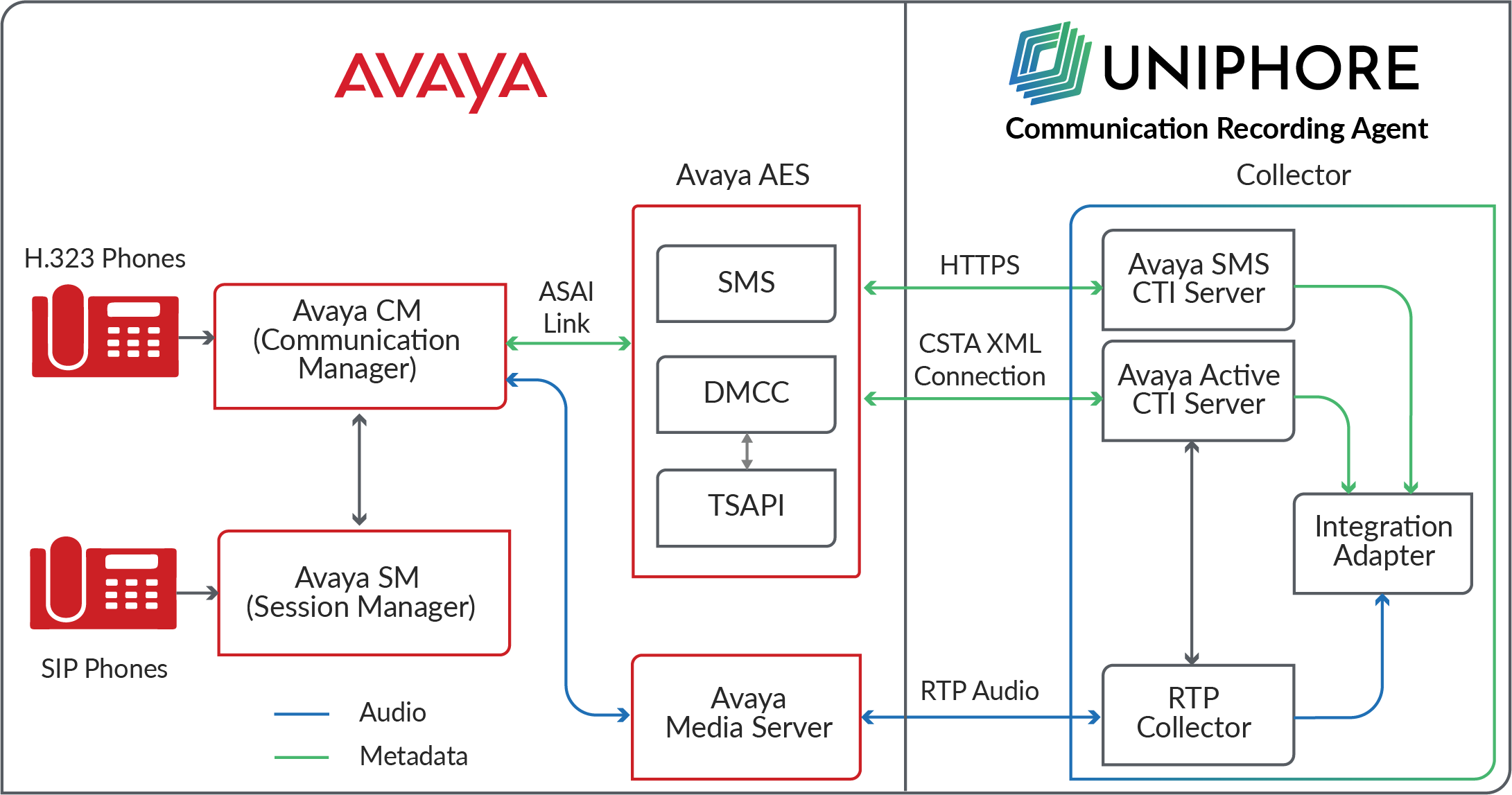
Using the Multiple Registration method, the Collector is configured to register as an additional instance of the target device to be recorded (two instances for stereo). The registration of each additional instance takes one DMCC and one TSAPI license on the Avaya AES.
With Single Step Conferencing, the Collector establishes a connection to the Avaya Aura AES DMCC service, giving the Collector the ability to monitor devices to be recorded (target devices) and to establish control of a pool of pre-provisioned “recording devices”.
As calls begin on target devices, a “recording device” is allocated from the pool and is conferenced into the call in progress so the audio can be recorded. When the call comes to an end, the conference is stopped and the “recording device” is released back into the pool for re-use.
Each pre-provisioned “recording device” takes one DMCC and one TSAPI license on the Avaya AES.
Resiliency
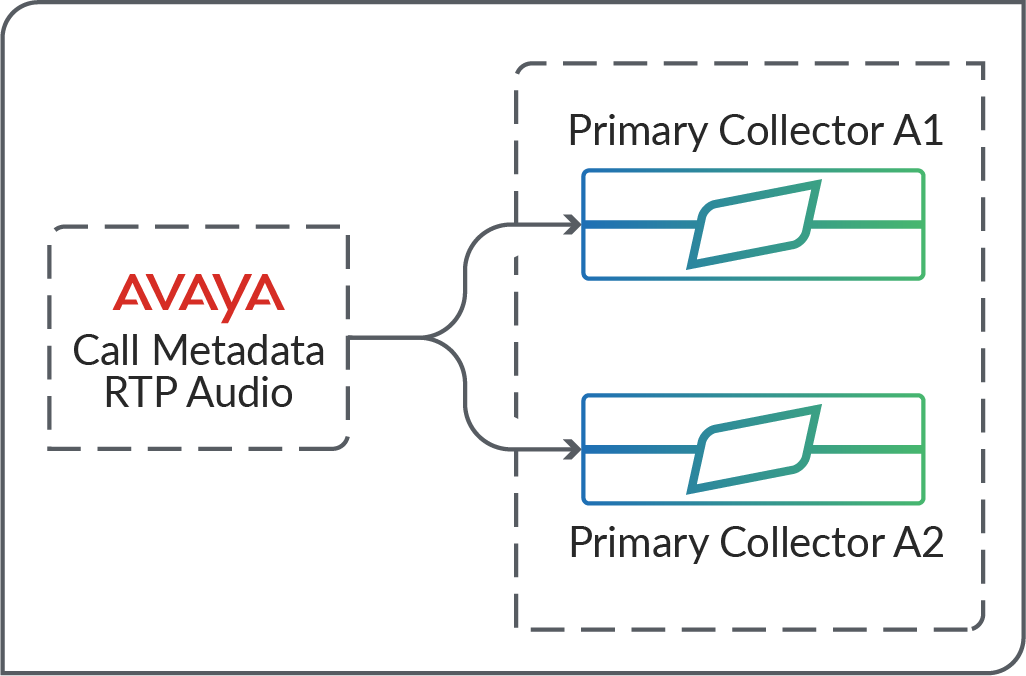
The Avaya Aura integration allows for Parallel mode (2N) resiliency - no additional resiliency models are supported. In Parallel configuration there are two Primary Collectors, each recording the same calls and having the same configuration. In the event of a critical error (failure) of a Collector, the other Collector will simply continue to capture data without loss of recordings.