Automatic Speech Recognition (ASR)
Automatic Speech Recognition (ASR) transcribes spoken language into text. The following steps outline the process by which recorded call audio is transformed into an accurate transcript with sensitive data redacted.
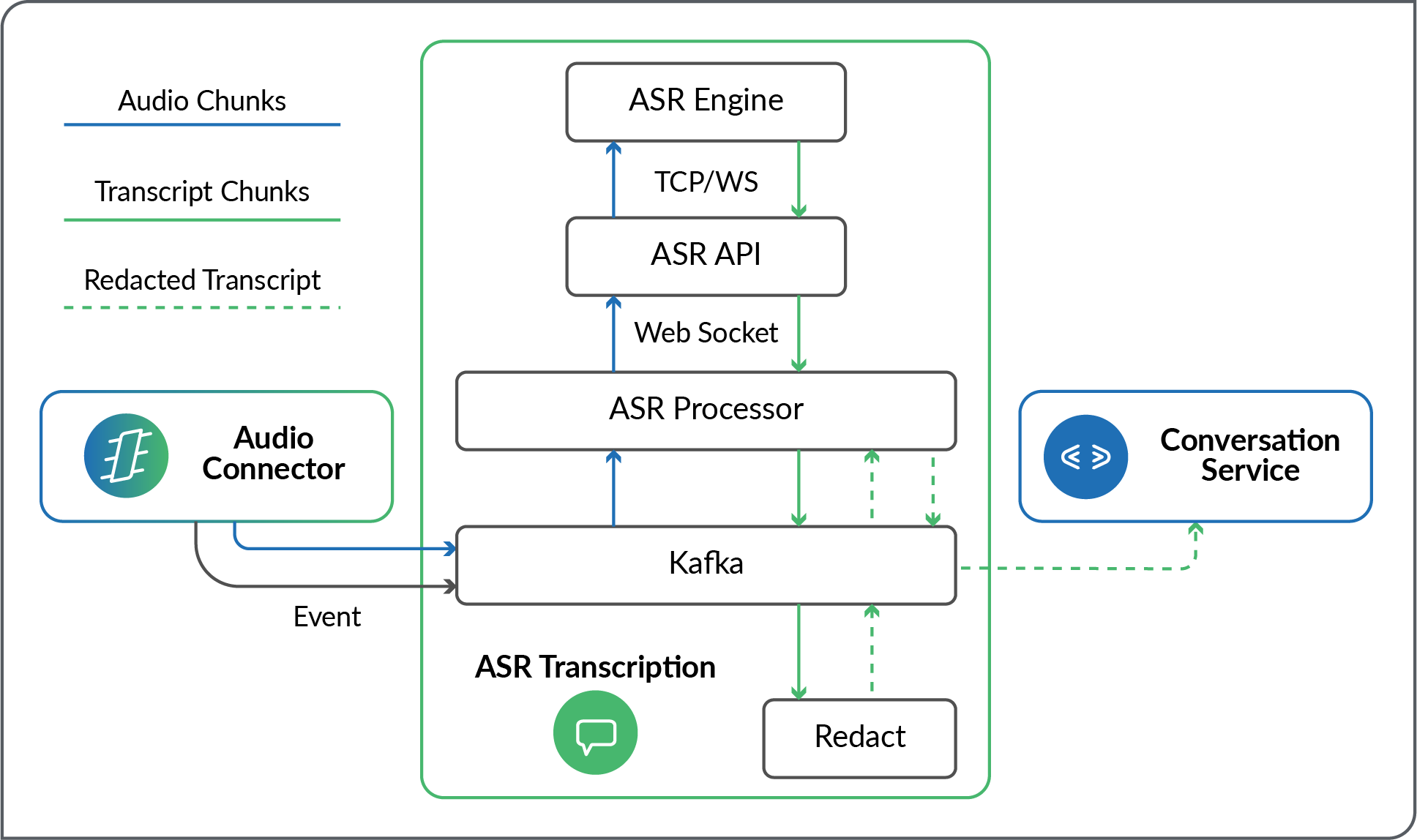
The audio connector receives real time call audio and streams the audio and call event to Kafka (in the ASR) in the form of 3 second audio chunks.
The audio chunk is then passed to the ASR Processor, where the language of the audio is determined.
The audio chunk and language are sent over WebSocket to the ASR API, which routes them to the appropriate ASR engine for transcription. The selected engine and connection method depend on the specified language.
The ASR Engine receives the audio chunk and converts it into text (a transcript chunk), then sends the transcript chunk to the ASR API where it's then sent to the ASR Processor.
The ASR Processor sends the transcript chunk to Kafka, where it's routed to the designated language-specific Redact service.
The Redact service removes any sensitive data and replaces it with either asterisks or labels denoting the redacted content's category.
The redacted transcript is sent to the ASR Processor via Kafka where it is then sent via Kafka to the Conversation Service and paired with the call's other metadata.
Note
The various connections to Kafka use TCP. For an introduction to Kafka, see the official Apache Kafka intro here.
Note
The above outlines how call audio is processed by the ASR as part of a Communication Recording Agent system. The ASR has additional features that are used by other applications. See the relevant documentation for details.